





Wellbeing in Buildings TG 10/2025
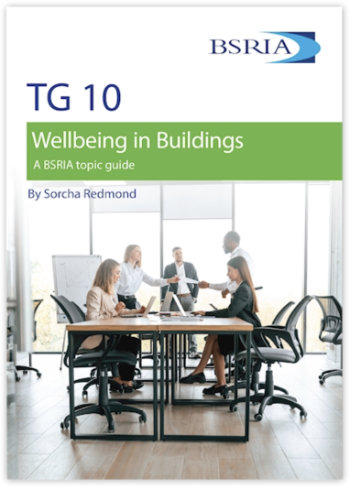
Published in January 2025, Wellbeing in Buildings (TG 10/2025) looks at the growing importance of wellbeing in the built environment, including information on building assessment schemes. It supersedes TG 10/2016 and is now free to download with registration here.
The built environment plays a significant role in health and wellbeing. Physical characteristics of the built environment such as functional design, air quality, thermal comfort, lighting, adaptability, future-proofing, access to green spaces and facilities all contribute to building users’ health and wellbeing.
This topic guide, written by Sorcha Redmond, considers what wellbeing means, how this has changed over time and what people need for their wellbeing. It looks at how growing recognition of the built environment’s influence on wellbeing has positively influenced approaches to health, mental health and overall wellbeing across the industry.
The guide discusses how wellbeing has featured more prominently in building assessment schemes including BREEAM before becoming central to the WELL and Fitwel schemes. The multiple assessment elements for wellbeing in these schemes are outlined, demonstrating their broad and equitable approach to optimising buildings for wellbeing.
See a sample or download the full guide for free here.
--BSRIA
[edit] Related articles on Designing Buildings
- All about wellness.
- BS ISO 45003 Psychological health and safety at work - managing psychosocial risks.
- Building related illness.
- Building services and health risk resilient buildings.
- Changing attitudes towards the mental wellbeing of early career Architectural Technology professionals.
- Construction leadership for mental health.
- Measuring the wellbeing benefits of interior materials.
- Mental health and wellbeing.
- Wellbeing and buildings.
- Wellbeing and creativity in workplace design - case studies.
- Wellbeing considerations for property managers.
- WELL and BREEAM align.
- WELL Building Standard.
- Workplace wellbeing in the heritage sector.
- What we know about wellbeing.
Featured articles
Check out some of the best features and news from Designing Buildings as well as key stories from around the web.

Government approach could undermine delivery and regeneration.
World's first mass timber data centre.

The overlooked environmental aspect of data centre development.
Introduction to radon awareness

New technical information sheet published by CIOB.

Updated supplier guide can help electrical contractors engage with NHP.

CIAT confirm the winners of the 2026 architectural technology awards.

Government launches a one stop shop for flood preparedness.

Sir Edwin Lutyens: Britain's greatest architect? Book review.

CIOB publishes free template to help assess and manage risks.
ECA's reflections on Party Conference season

Burnham wants to be confident of winning before asking for a fresh mandate.
New Chief Construction and Scientific Adviser

Sergio Cavalaro, Professor of Infrastructure Systems at Loughborough University.
Building safety levy for England

CIAT publish estimator tool for members.

Water sector faces a growing crisis that could slow the delivery of vital infrastructure.